Operational Key Takeaways
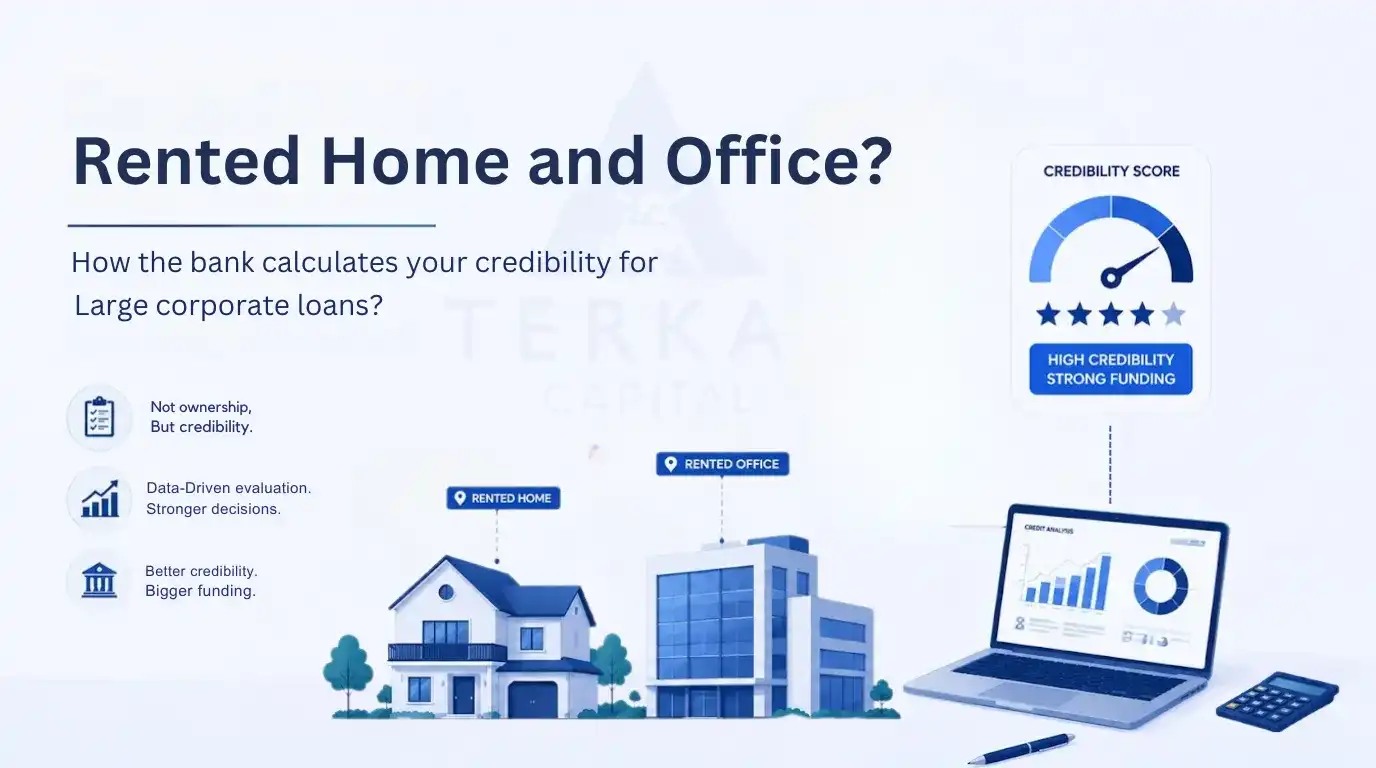
In traditional retail banking risk models, owning your own office building or a promoter’s own residence are key indicators of stability. Automated credit scoring engines reject files where both operating corporate office as well as promoter’s residence are rented. It is seen as a potential flight risk or a sign of unstable corporate tenure. This structural filter routinely penalizes modern, high-performing companies that have deliberately adopted an asset-light, decentralized lifestyle in order to reduce unnecessary real estate overheads.
To overcome this institutional risk hurdle, the credit file presentation needs to show that high operational margin efficiency can replace physical brick-and-mortar setups. Working from rented or decentralized spaces means your company does not have massive real estate rental overheads, which directly improves your debt service coverage capacity.
This will be looked at by lenders with a deep-dive analysis of your primary current account statements, comparing long-term client retention velocity to no ownership of physical property. When the transaction data suggests a sticky, high-velocity customer base, the credit risk management team manually overrides the automated address warnings.
Example in the Real World
Highly profitable 100% remote enterprise software company. The corporate registration address and the promoter’s home are both rented. They have zero real estate rental drag. They print ₹20 Crores in annual turnover with clean operating margins of 35%.
But when they applied for a high-ticket unsecured operational line, the bank’s automated risk desk initially flagged the file for rejection because there were no self-owned physical asset markers.
The presentation of the file was intended to emphasize the firm’s higher operating margin efficiency. The team lodged audited balance sheets showing that cash released from real estate overheads was directly improving the liquidity reserves. To satisfy all the internal compliance checkboxes in the bank, a family shareholder with a self-owned residential asset was brought in as a non-operating co-applicant. This structural change met the permanent stability mandate of the bank and a corporate loan line of ₹3 Crore was smoothly sanctioned.
Key Operational Learnings
- Operational Margin Focus: Show lenders how zero real estate overhead directly improves cash retention and turn your rented or remote setup into a financial strength.
- Transaction Tracking Ideal historical banking habits and consistent average balances are a better indicator of stability than physical land titles.
- Structural Safety Valves: Bringing in an asset-owning co-applicant or shareholder allows you to comply with strict institutional stability requirements without sacrificing your asset-light corporate model.
Enjoying our insights? Never miss an update on Google Discover or Google Reads. ➜