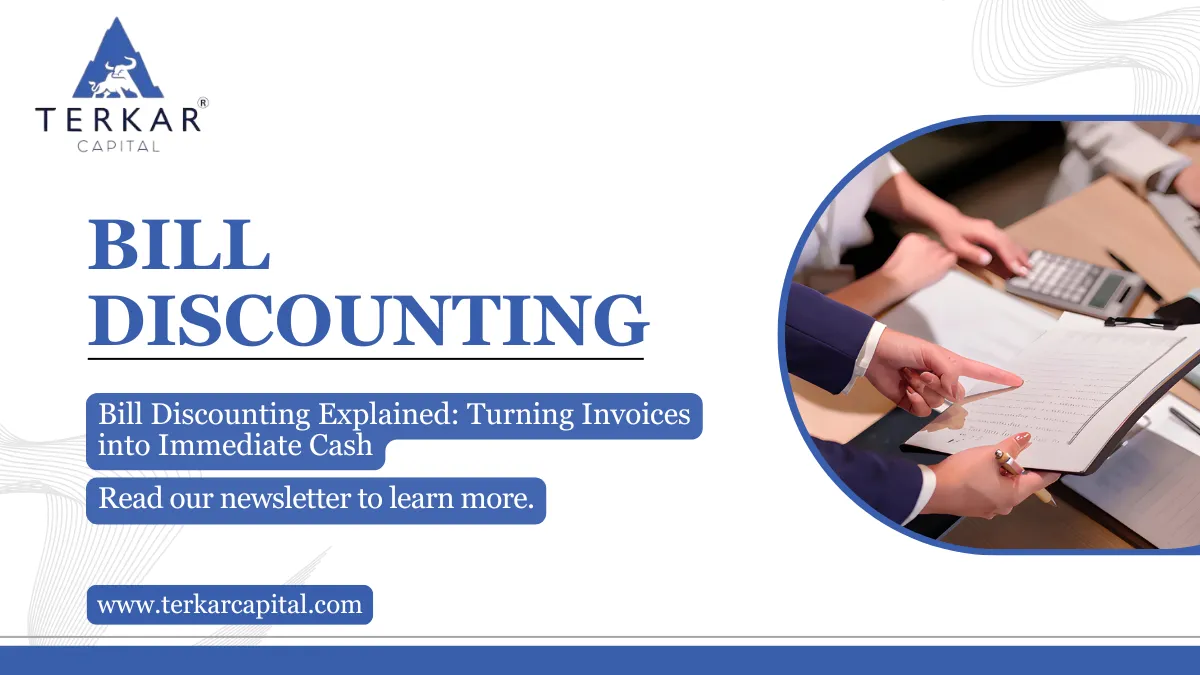
For many promoters and entrepreneurs, growth isn’t limited by demand. It’s limited by credit periods. Orders are executed, Invoices are raised. But payments arrive after 30, 60, or even 90 days. During this time, working capital remains blocked, impacting the next production or sales cycle. That’s where bill discounting becomes a smart working capital solution.
1. What Is Bill Discounting?
Bill discounting is a short-term funding facility that allows businesses to receive funds against confirmed invoices, instead of waiting for the full credit period to end. Unlike traditional working capital limits, the lender doesn’t fund the entire business. They fund specific transactions.
2. The Two Common Types of Bill Discounting
1. Sales Invoice Discounting
Used after you’ve already delivered goods or services and raised an invoice on your customer.
Typical flow:
- Goods or services delivered
- Invoice raised
- Payment expected after a credit period
How funding works:
- The lender releases 80-95% of the invoice value immediately
- The balance is settled once the customer makes the payment
This helps businesses keep operations running without waiting for collections.
2. Purchase Invoice Discounting
Used when you need to pay suppliers for raw materials or goods.
Typical flow:
- Supplier raises an invoice
- Payment is due immediately or within a short time
How funding works:
- The lender pays the supplier directly on your behalf
- You repay the lender as per the agreed terms. Generally, 90 – 120 days.
This ensures smooth procurement without putting pressure on cash flow.
3. Important Eligibility amp; Practical Points
Before considering bill discounting, businesses should understand a few key realities.
1. Turnover Expectations
Most lenders prefer businesses with turnover of around ₹10 crore or more. This indicates transaction volume and operational stability.
2. Funding Is Transaction-Based
Bill discounting is not a full working capital limit.
Typically, only a small portion around 5% of sales or purchase turnover is considered for discounting at any given time.
This keeps the facility controlled and purpose-driven.
3. Track Record Matters
Lenders usually prefer:
- Existing relationships with buyers and suppliers
- Repeat transactions
- A clear history of invoicing and settlements
One-off or new counterparties are less favoured.
4. Counterparty Quality Is Crucial
Funding decisions are based not just on your business, but also on:
- Your customer (for sales invoices)
- Your supplier (for purchase invoices)
Their credibility and payment behaviour directly affect approval.
4. How the Process Worksnbsp;
- A confirmed sales or purchase invoice is generated
- Invoice and transaction details are submitted
- The lender evaluates the transaction and counterparty
- A portion of the invoice value is released
- Final settlement happens once payment is completed
This structure improves liquidity without adding long-term debt.
5. Who Should Consider Bill Discounting?
Bill discounting works best for:
- Businesses dealing with large corporates
- Companies operating on fixed credit cycles
- Manufacturers, traders, and distributors
- Promoters looking to unlock cash already earned
Bill discounting isn’t about borrowing more. It’s about unlocking money that’s already yours.
When used correctly, it strengthens cash flow, improves vendor relationships, and supports growth without increasing long-term leverage.
Stay Ahead of the Market
Get these updates directly on Email. No spam, just critical financial alerts.
Enjoying our insights? Never miss an update on Google Discover or Google Reads. ➜